
ADA Accessible Bathroom and Shower Tile Installation
Contact Us Today!
What Makes Accessible Bathroom Tile Installation Different
Standard shower builds allow for some flexibility in slope and threshold design. Accessible shower installations do not. A curbless, roll-in, or zero-threshold shower must be sloped precisely so that water drains completely without pooling — and that slope must be consistent across the entire shower floor, including the transition area at the entry.
Getting this right requires careful planning before a single tile is set. The drain location, the floor slope, the substrate system, and the waterproofing layer must all work together. If any of these elements is off, the shower will hold water in areas where a person may be standing or seated — a safety hazard that tile and grout cannot fix after the fact.
JPond Custom Tile evaluates each accessible bathroom project as a complete system. Substrate preparation, waterproofing, slope design, and tile selection are all addressed before installation begins, ensuring the finished shower functions exactly as it needs to.
Curbless and Zero-Threshold Shower Tile Installation
The most common tile challenge in accessible bathroom design is the curbless shower. A standard shower curb holds water inside the shower and makes waterproofing the transition relatively straightforward. A curbless shower eliminates that curb entirely, which means the floor must be sloped and the waterproofing system must extend properly across the transition zone to prevent water from traveling onto the bathroom floor.
JPond Custom Tile builds curbless showers using linear drain systems or center drain configurations with multi-directional slope, depending on the layout of the space. The floor is sloped to move water efficiently toward the drain while remaining flat enough near the entry for safe, stable footing — an important balance for anyone using a shower chair, bench, or mobility aid.
Waterproofing membranes are installed beneath the tile surface and extend through the transition area to ensure the system is fully protected. The transition between the shower floor and the bathroom floor is tiled cleanly and finished with precision to eliminate trip hazards and maintain a safe, even surface.
Slip-Resistant Tile Selection for Accessible Bathrooms
Tile selection matters significantly in an accessible bathroom. Smooth, polished tile may look refined, but it becomes dangerous when wet — particularly on a shower floor where someone may be transferring from a wheelchair or using a shower bench. ADA guidelines recommend tile with a wet dynamic coefficient of friction (DCOF) rating of 0.42 or higher for floors used in wet conditions.
JPond Custom Tile helps homeowners select tile that meets the functional requirements of an accessible bathroom without sacrificing the appearance of the space. Matte-finish porcelain, textured natural stone, and small-format tile with tighter grout joint patterns all provide improved traction underfoot while holding up well under daily use.
Tile selection also affects how the floor performs over time. Softer or more porous materials may degrade faster in high-moisture environments. The right tile for an accessible shower must balance slip resistance, durability, ease of maintenance, and appropriate sizing for the slope system being used.
Shower Bench and Seat Tile Installation
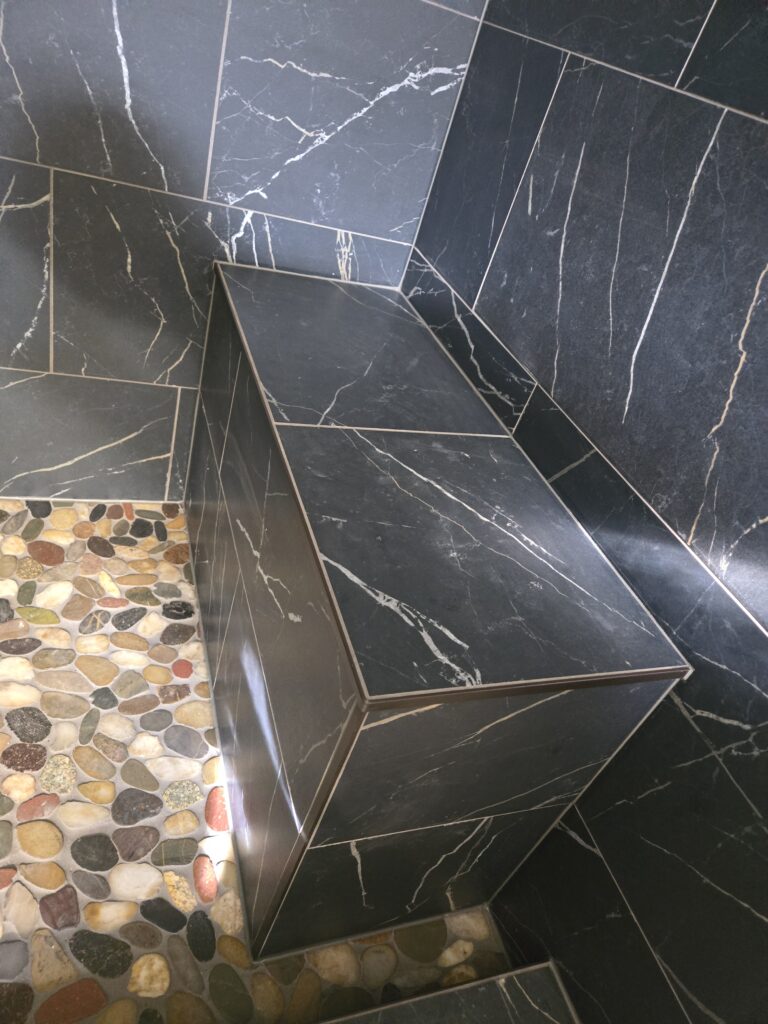
A properly tiled shower bench or fold-down seat is a key element of many accessible shower designs. Shower benches must be tiled to the same waterproofing and slope standards as the shower floor and walls — water should never pool on top of a bench surface, and the structure behind the tile must be fully waterproofed.
JPond Custom Tile frames and tiles shower benches as structural components of the shower system, not surface additions. The bench top is sloped slightly to shed water, the edges are finished cleanly, and all transitions between the bench and the surrounding walls are sealed correctly to prevent moisture intrusion.
Whether the bench is built into the corner of the shower or runs along a full wall, the tile installation is completed with the same attention to structure, waterproofing, and finish quality as the rest of the shower.
Shower Floor Slope and Drain Placement
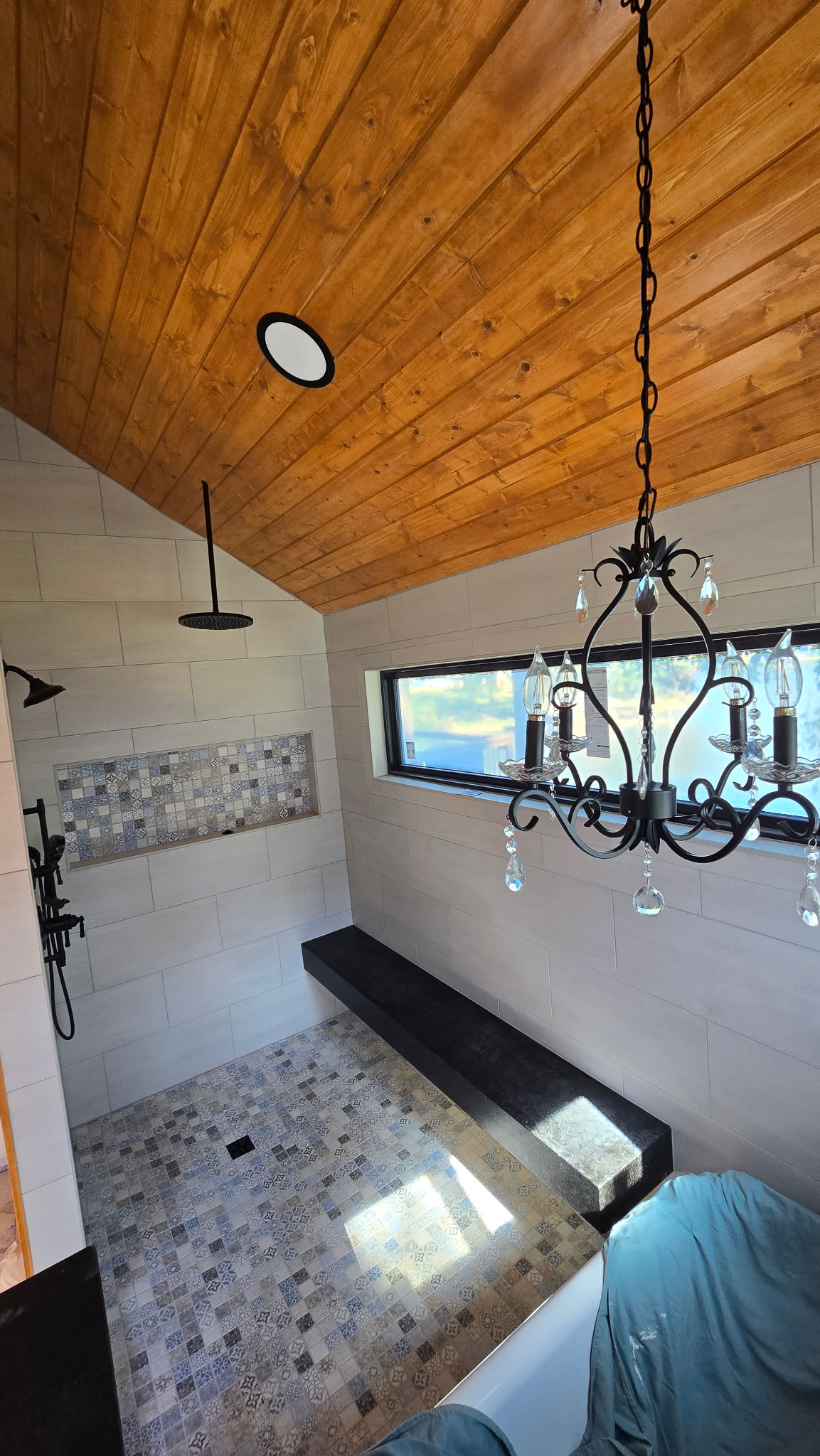
In an accessible shower, drain placement and floor slope are not afterthoughts — they are the foundation of how the entire installation performs. A poorly placed drain or inconsistent slope creates low spots where water collects, which is both a slip hazard and a long-term waterproofing risk.
JPond Custom Tile plans drain placement and floor slope before any tile is set. For standard center drains, the floor is sloped evenly toward the center from all sides. For linear drains positioned along one wall or at the entry, the floor slopes uniformly in a single direction. Both configurations require precise tile cutting and setting to maintain consistent slope without creating uneven or rocking tile surfaces.
This planning process ensures that water moves where it is supposed to move — toward the drain and out of the shower — without creating hazards or long-term moisture issues beneath the tile.
Waterproofing Accessible Shower Installations
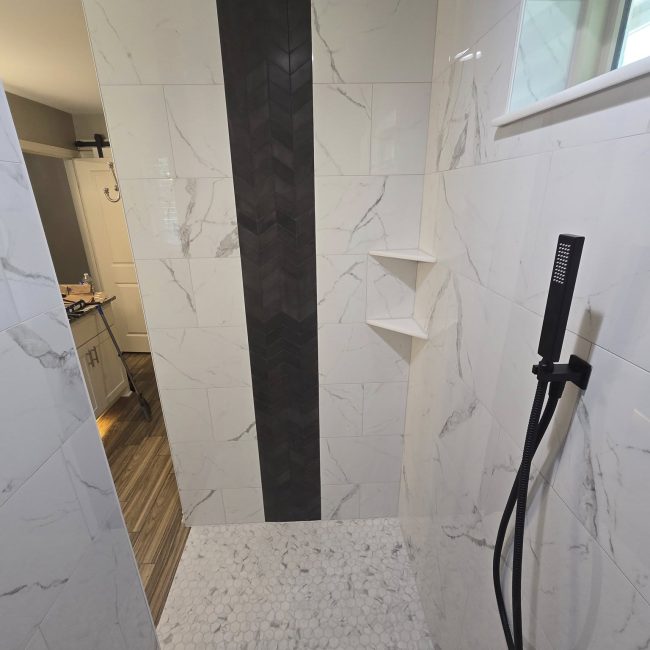
Waterproofing is always the most critical component of any shower build, and it becomes even more important in an accessible shower where the threshold and transition areas are open rather than contained by a curb. Without a properly installed waterproofing system beneath the tile, moisture can migrate through the shower floor and into the surrounding structure.
JPond Custom Tile installs waterproof membranes beneath the tile on the shower floor and walls and extends the waterproofing system through the transition zone at the shower entry. Drain connections are sealed and integrated with the waterproofing layer so there are no gaps in the system.
Accessible Bathroom Floor Tile Installation
The tile beyond the shower matters in an accessible bathroom as well. Bathroom floors used with wheelchairs, walkers, or other mobility aids benefit from slip-resistant tile that is also smooth enough to allow easy movement. Large-format tile with minimal grout joints creates a cleaner rolling surface for wheelchairs, while smaller mosaic tile adds traction but can create more resistance for wheeled mobility devices.
JPond Custom Tile evaluates the full bathroom layout when planning accessible tile installations. The goal is a floor surface that is safe for someone on foot and functional for someone using a mobility aid — a balance that requires both careful tile selection and precise installation.
Transitions between the bathroom floor and adjacent surfaces such as hallways or bedroom flooring are also finished cleanly and flush to eliminate any raised edges that could create a trip hazard or interrupt wheelchair movement.
Trusted ADA Accessible Tile Installation by J Pond Custom Tile
Accessible bathroom and shower tile installation is technical, demanding work. The slope has to be right. The waterproofing has to be complete. The tile has to perform safely underfoot. And all of it has to come together in a space that a person will depend on every day.
JPond Custom Tile approaches accessible bathroom projects with the same preparation-first discipline and accountability that defines every installation. There are no rotating crews and no handoffs — the installer who quotes the project is the same professional who completes the work, ensuring that every decision made in the planning process is executed correctly in the field.
If you are planning an ADA accessible bathroom or shower remodel in Tyler, TX or the surrounding East Texas area, JPond Custom Tile can help you build a space that is safe, durable, and done right from the ground up.